I'm a builder who started on stage.
I once taught a woman named Donna how to video-call her grandkids. The look on her face when it worked is something I still carry with me. That was my first startup: helping seniors learn to use technology.
I've been chasing that feeling ever since. Everything else is noise.
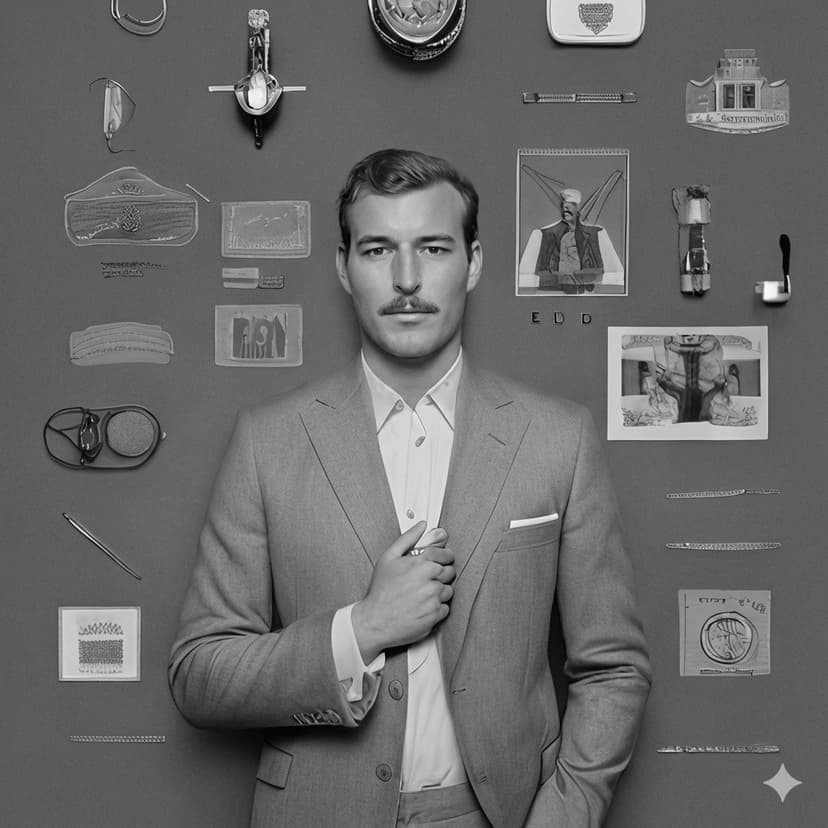
Stage to Startups to Strategy
My career started on stage. Seven years of musical theatre, TV, and film. None of it came from business school. It came from performing eight shows a week and learning that if you lose the audience in the first thirty seconds, you never get them back.
That background is the single most useful thing I carry into every client room. Executive presence, reading an audience, knowing how to tell a story that lands.
When I left performing, I went where I could see the impact directly. First: helping seniors learn to use technology (real people, real problems, faces lighting up when something finally clicked). Then: electric school buses, combining clean transportation with the most underserved riders in America.
Then came Tide Rock, a private equity firm where I became Director of AI. I deployed AI across the entire organization: operations, corporate development, HR, accounting. Every department had the same story: the technology worked, but the organization wasn't ready for it.
The gap was never the model. It was the strategy, the people, the change management. Seeing what was possible across every function of one firm made me realize how much opportunity existed across hundreds.
The thread across all of it: technology serving people who are underserved or overwhelmed. That thread became Cadre AI.
The Organizational 95%
Cadre AI is an AI consulting firm for mid-market companies. The $50M to $500M businesses that are too big to ignore AI and too lean to waste money on the wrong bet. Most AI consultants focus on the technology. I focus on the organizational 95%: the strategy, the people, the change management that determines whether a transformation actually sticks.
Here's the thing that sets us apart: I build with the tools I recommend. Claude agent architectures, AI workflow automation, custom workspaces teams actually use. I maintain 118+ production skills and this website is a living example. When I sit across from a CTO and say “this will work,” it's because I've built it myself first.
We work across four areas: AI strategy and transformation roadmaps, Command Center builds (custom AI workspaces teams actually use), process automation, and training that changes how people work, not just how they prompt.
10,000+
People Reached
50+
Organizations
30+
Direct Clients
The Human Problem Behind Every AI Problem
Most AI consultants think transformation is a technology problem. I think it's a human behavior problem.
When a team resists a tool that clearly works, I'm not asking what's wrong with the rollout. I'm asking what feels threatening about it. Behavioral economics, psychological safety, loss aversion. These are the tools I use to figure out why an AI pilot succeeds in one department and dies in another.
And there's the Jevons Paradox: when AI makes execution cheaper, organizations don't do less. They do more. The efficiency gains create demand, not headcount reduction. Most transformation plans get this wrong.
I worked with a CTO who told his team he didn't think they needed consulting help. Smart people, good engineers. They'd figure it out. Two weeks into the engagement, he was bought in. The technology hadn't changed. The process had.
I should be honest about one thing. I'm a recovering perfectionist. For years I held everything to an impossibly high standard, and it cost me: missed deadlines, projects that stalled at the finish line. The biggest lesson I've learned as a founder is that 80% delivered beats 100% delayed. I still remind myself of that almost daily. It's made me a better consultant. I'd rather help you ship something real this quarter than design the perfect system that never launches.
Outside of work, I build games. My brain needs to ship things that don't have a client attached. I still play music. And I think in systems whether I want to or not.
What are you building?
Whether it's your first AI pilot or a full transformation roadmap, tell me what you're trying to solve.
Get in Touch